
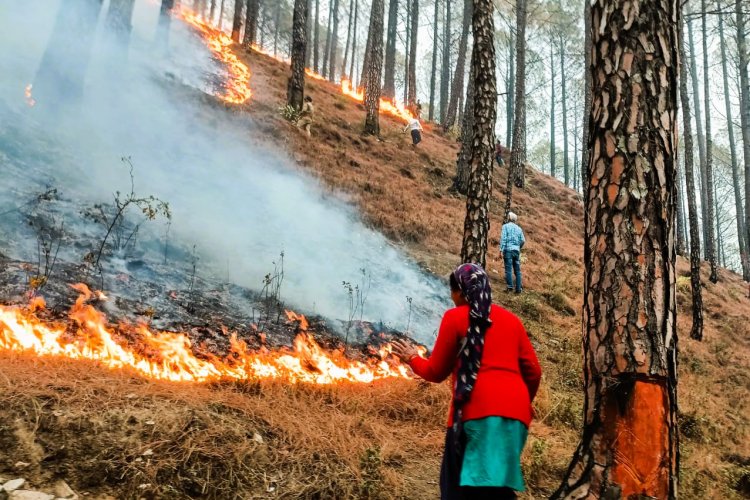
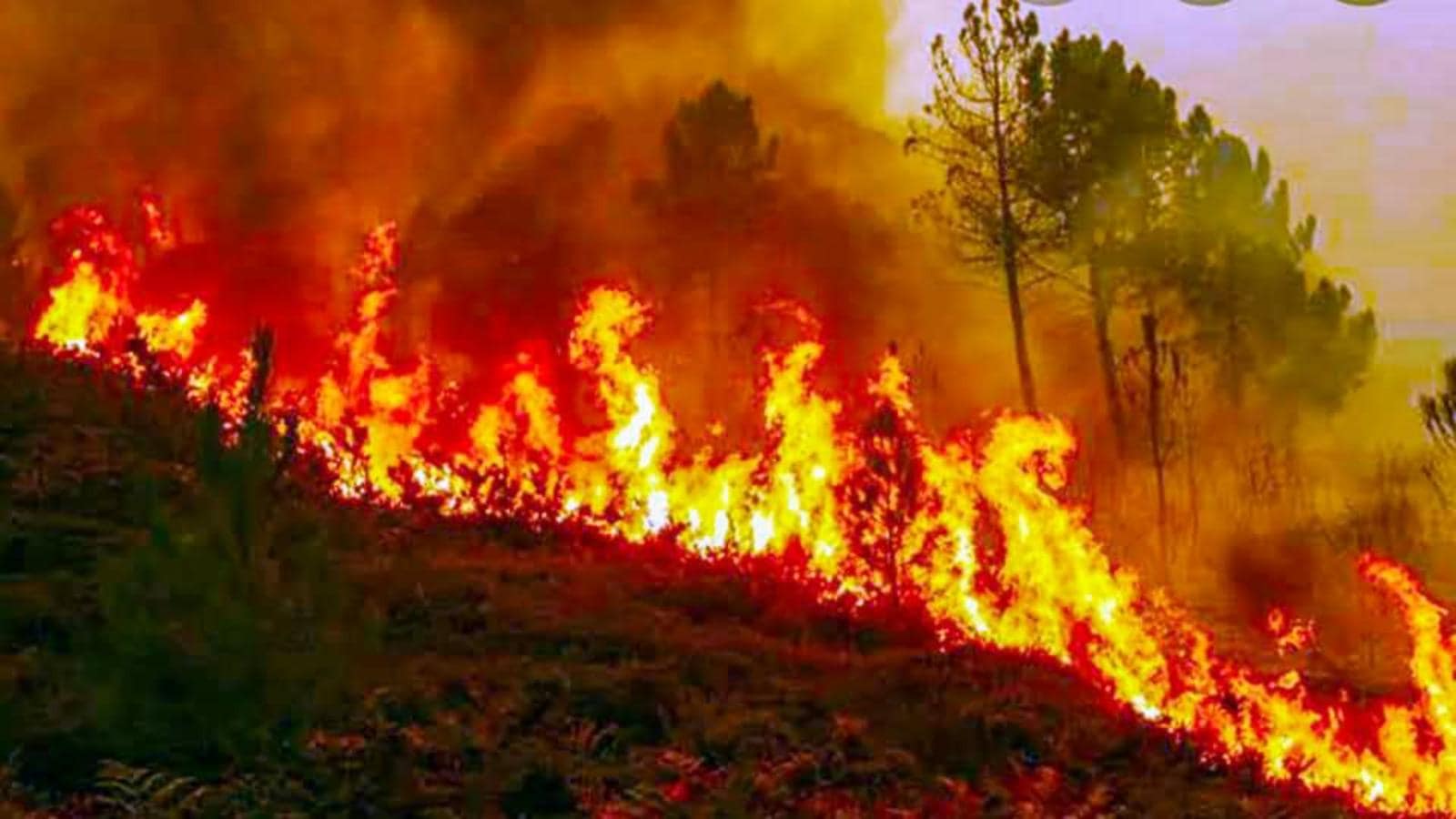
Uttarakhand is witnessing an alarming rise in forest fires, with climate change increasingly being identified as a key factor behind the growing frequency and intensity of these incidents. Once considered seasonal events limited to peak summer months, wildfires in the Himalayan state are now occurring earlier in the year and spreading across larger forest areas, raising serious environmental and climate concerns.
Experts point to rising temperatures and changing weather patterns as major drivers of the crisis. Warmer winters, reduced snowfall, and prolonged dry spells have significantly lowered moisture levels in forest floors, making dry leaves, grass, and pine needles highly combustible. This shift has extended the fire season well beyond its traditional timeline, increasing the likelihood of large-scale forest fires.
Climate change has also disrupted precipitation patterns in the region. Erratic rainfall and long gaps between wet spells reduce the natural dampness that once acted as a barrier against fire spread. As a result, even small ignition sources — whether natural or human-induced — can quickly turn into uncontrollable blazes across steep Himalayan terrain.
The environmental impact of these wildfires is severe. Large tracts of forest cover, home to diverse plant and animal species, are being damaged or destroyed. Frequent fires degrade soil quality, burn organic matter, and weaken root systems, making mountain slopes more vulnerable to erosion and landslides during the monsoon season. This poses long-term risks to both biodiversity and human settlements downstream.
Wildfires in Uttarakhand also contribute to climate stress beyond the immediate region. Smoke and particulate matter released into the atmosphere worsen air quality and can travel hundreds of kilometres. More critically, black carbon particles from forest fires can settle on nearby glaciers and snowfields. This darkens their surface, increases heat absorption, and accelerates glacier melt — a major concern for Himalayan river systems that support millions of people.
The fires further create a dangerous feedback loop. Forests act as carbon sinks, absorbing carbon dioxide from the atmosphere. When they burn, not only is this storage capacity reduced, but large amounts of carbon dioxide are released back into the air, intensifying global warming and increasing the likelihood of future fires.
Local communities are among the worst affected. Forest-dependent livelihoods suffer as grazing land, medicinal plants, and other resources are lost. Health issues linked to smoke inhalation and reduced air quality add to the burden, particularly for children and the elderly.
Scientists and environmentalists stress that Uttarakhand’s wildfire problem cannot be addressed through firefighting alone. Long-term solutions must include climate-adaptive forest management, early warning systems, improved monitoring, and community participation. Reducing global greenhouse gas emissions remains critical to slowing the climate-driven changes that are making such disasters more frequent.
The rising incidence of wildfires in Uttarakhand serves as a stark reminder that climate change is no longer a distant threat. Its impacts are already unfolding in the Himalayas, endangering ecosystems, water security, and lives — and demanding urgent policy and environmental action.
Note: Content and images are for informational use only. For any concerns, contact us at info@rajasthaninews.com.

Previous Post

Next Post
"इको-फ्रेंडली इनोवेश...
Related Post