
Business
“GST 2.0 Debate Heats Up: Telangana’s Bhatti Vikramarka & Kerala’s K.N. Balagopal Speak at ‘The Hindu Mind LIVE’”
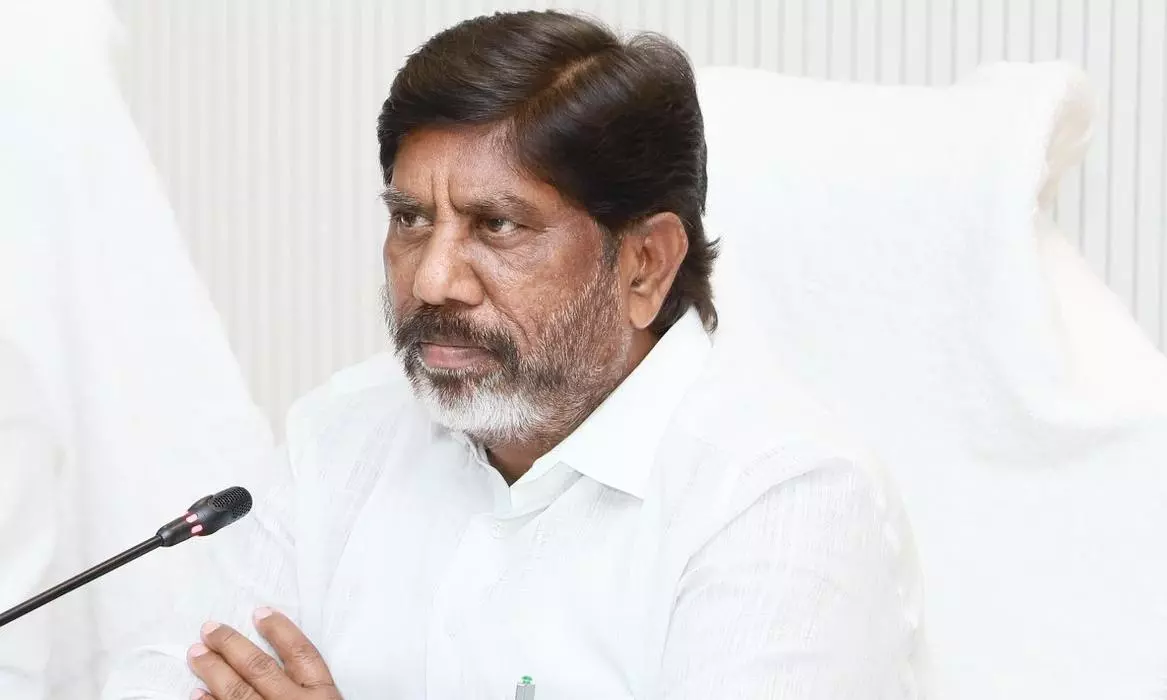
In the swirl of political debate and fiscal uncertainty, The Hindu Mind LIVE recently hosted a much-anticipated session on GST 2.0, featuring Mallu Bhatti Vikramarka, Deputy Chief Minister of Telangana, and K. N. Balagopal, Finance Minister of Kerala. The two leaders delivered starkly resonant messages, steeped both in caution and challenge, about how the sweeping tax reforms might reshape state finances and responsibilities.
Setting the Stage: What Is GST 2.0?
Before we dive into what they said, let us anchor ourselves in what “GST 2.0” means. In September 2025, the GST regime in India was rationalised — reducing multiple slabs into two primary rates (5% and 18%) plus a select higher rate for luxury/sin goods. The goal: simplify compliance, ease burden on consumers, and streamline indirect taxation. But the flip side: states worry that their revenues will shrink, and that the new regime may shift burdens in opaque ways.
It is against this backdrop that Bhatti Vikramarka and Balagopal stepped into the LIVE spotlight.
Telangana’s Voice: Bhatti Vikramarka’s Stand
Mallu Bhatti Vikramarka did not mince words. He asserted that Telangana stands to lose about ₹5,000 crore annually under GST 2.0. He called upon the Centre to guarantee compensation for at least five years to buffer states from sudden revenue shocks.
During his address to traders, he urged them to display the reduced prices transparently, explain to customers how the tax rationalisation affects cost, and cooperate with the effort to ensure benefits reach the public. He defended the GST cuts on cement (slashing from 28% to 18%), agric ultural equipment, and food items—arguing these changes would spur growth in construction, benefit farmers and ease burdens on households.
At the same time, he acknowledged the loss ceiling: he asked his officials to intensify revenue mobilisation across departments, conduct departmental reviews (especially stamps & registration), and submit policy proposals to offset the deficit. In short, he balanced a tone of warning with a call to action: the state must adapt, raise what it can, and demand fairness from the Centre.

Kerala’s Alarm: K. N. Balagopal’s Warnings
From the southern shore, K. N. Balagopal’s message was more somber. He cautioned that states like Kerala are uniquely vulnerable to the reform’s side effects, given their consumption patterns are skewed toward items that attracted higher GST earlier.
Balagopal estimated possible revenue losses in the range of ₹50,000 crore to ₹2 lakh crore annually, depending on how deeply the changes alter tax collections and how well states can protect essential services. He warned that without a proper compensation mechanism from the Centre, states would struggle to maintain pensions, social welfare, salaries, and development programs.
Moreover, he raised a critical point: tax cuts do not automatically translate into consumer gains. Industries might delay or avoid passing the benefit to buyers, retaining margins instead. He also criticized that the reforms had been introduced without sufficient state-level studies, and that prior mechanisms to check anti-profiteering had been dismantled or are weak.
He urged that states must be heard in decision-making, that growth should benefit all—not just pockets of the economy—and that the Centre should ensure states are not left financially hamstrung.
Clash of Realities: Between Promise and Peril
What emerges from that LIVE session is a tension between promise and peril.
On one hand, the promise: rationalised GST is supposed to reduce complexity, lower prices, spur consumption, and ease compliance burdens (especially for small traders). Bhatti echoed these potentials.
On the other, the peril: if states lose too much revenue, they may cut back on essential services, welfare, or face fiscal distress. Balagopal’s fears reflect that side.
Bhatti and Balagopal’s voices are not oppositional so much as complementary: one pushes for implementation with safeguards and accountability; the other sounds alarms about systemic inequities and compensation gaps.
The core demand from both: a robust compensation mechanism from the Centre, long enough to absorb transition shocks, and with fair formulas that respect states’ structural differences.
What Lies Ahead
As India rolls into this new tax regime, a few battlegrounds loom:
Compensation Duration & Formula: Will the Centre agree to guaranteed support for 5 years (as Bhatti demands)? Will the formula factor in states’ consumption patterns (especially high GST states like Kerala)?
Monitoring & Anti-Profiteering: Who will ensure that tax cuts are passed to the public, not pocketed by firms?
State Adaptation: Can states ramp up alternate revenue sources, improve collection machinery, reform departments?
Political Fallout: Differences among states, and between states and Centre, might create strain on fiscal federalism.
To me, what this LIVE event revealed is: GST 2.0 is not just a tax reform, it’s a stress test on Centre-State relations, on how power, money, and policy must negotiate fairness.
Note: Content and images are for informational use only. For any concerns, contact us at info@rajasthaninews.com.

Previous Post

Next Post
जयपुर मे सोने और चां...
Related Post