

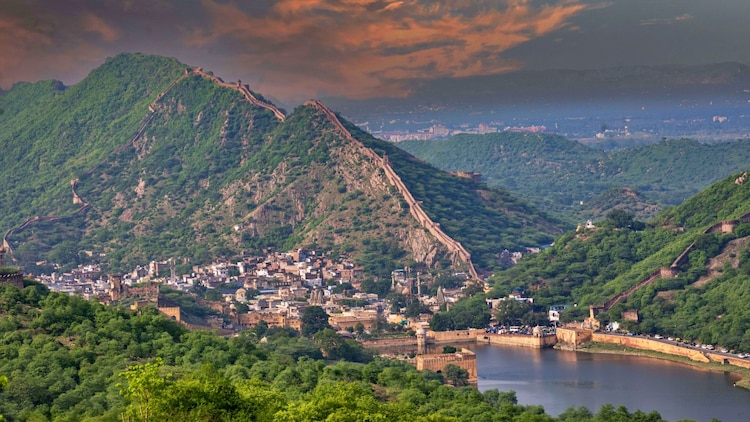
The Aravalli mountain range, one of the oldest geological formations on Earth, formed nearly 2.5 billion years ago, is facing an alarming threat of extinction and could largely disappear by 2059 if current patterns of degradation continue. Stretching over 800 kilometers across Rajasthan, Haryana, Delhi, and Gujarat, the Aravallis have played a critical role in shaping India’s climate, ecology, and water systems for millennia.
Geologists regard the Aravalli range as older than the Himalayas by billions of years, making it a living archive of Earth’s early history. Beyond its geological importance, the range acts as a natural barrier against desertification, preventing the Thar Desert from advancing eastward into the fertile plains of north India. It also supports diverse ecosystems, wildlife corridors, and groundwater recharge zones that sustain millions of people.
Despite its significance, the Aravallis are under relentless pressure from illegal mining, deforestation, urban expansion, and infrastructure development. Large sections of the range have been flattened or fragmented to extract stone, marble, and minerals, often in violation of environmental regulations. Rapid urbanisation around the National Capital Region (NCR) has further accelerated the destruction, with hills being cut to make way for roads, housing projects, and industrial zones.
Environmental experts warn that continued degradation could lead to irreversible consequences. The loss of the Aravallis would worsen air pollution, as the hills currently act as a natural dust barrier. Groundwater levels could fall sharply due to reduced recharge, intensifying water scarcity in already-stressed regions like Rajasthan and Haryana. The disappearance of forest cover would also increase heatwaves, reduce rainfall stability, and threaten biodiversity, including several endangered plant and animal species.
Climate change has compounded these challenges. Erratic rainfall patterns, rising temperatures, and prolonged droughts are weakening the already fragile ecosystem. Without vegetation and intact hill structures, the Aravallis are less capable of withstanding climatic stress, accelerating erosion and land degradation. Experts caution that if protective measures are not urgently enforced, the range may lose its ecological functionality well before 2059.
Legal protections for the Aravallis exist, including Supreme Court directives restricting mining and construction in ecologically sensitive zones. However, enforcement remains inconsistent. Environmentalists argue that stronger governance, clear boundary demarcation, and community-led conservation are essential to prevent further damage. Restoration efforts such as afforestation, mine reclamation, and sustainable land-use planning could still help revive degraded sections.
The potential disappearance of the Aravalli range is not just an environmental concern but a national one. Losing a 2.5-billion-year-old natural shield would have far-reaching impacts on climate resilience, water security, and public health across northern India. As the clock ticks toward 2059, experts stress that immediate and coordinated action is the only way to ensure that this ancient mountain system survives for future generations.
Note: Content and images are for informational use only. For any concerns, contact us at info@rajasthaninews.com.

Previous Post

Next Post
"इको-फ्रेंडली इनोवेश...
Related Post