
Health
India Unveils MANAS 1: Open-Source Brainwave AI Tool for Early Detection of Neurological Disorders
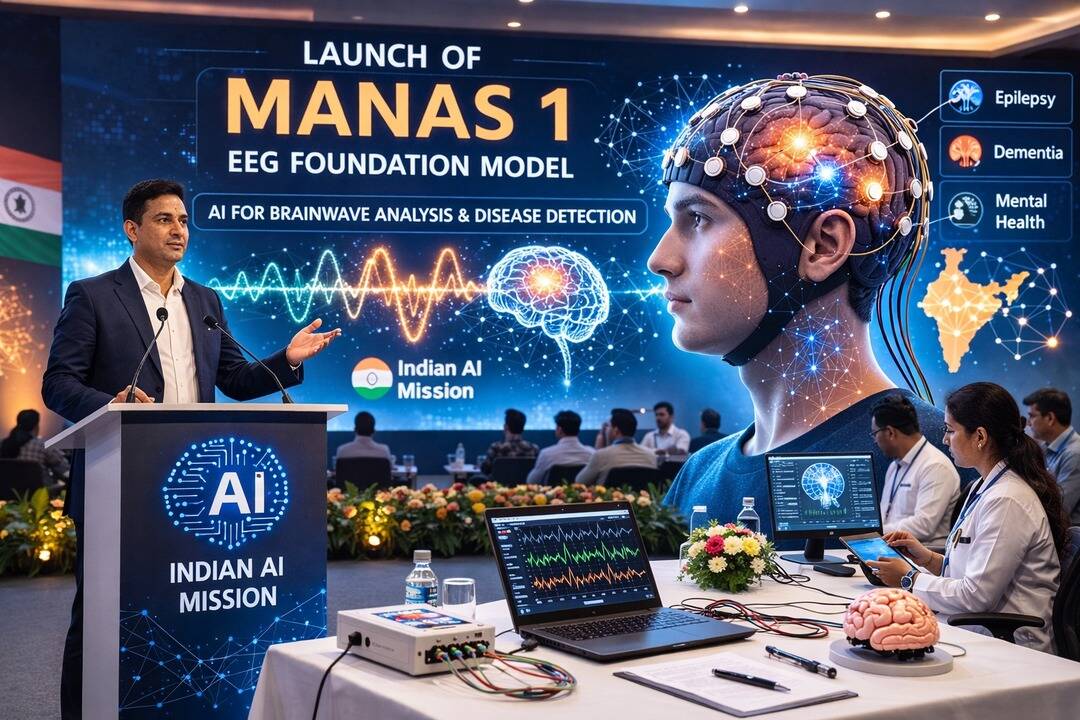
India has unveiled MANAS 1, an open-source artificial intelligence tool designed to detect neurological disorders at an early stage using brainwave analysis. The launch represents a significant advancement in the country’s growing health-tech ecosystem and highlights India’s commitment to leveraging AI for accessible and preventive healthcare solutions.
MANAS 1 operates by analyzing electroencephalogram (EEG) brainwave patterns through advanced machine learning algorithms. These algorithms are trained to identify subtle abnormalities in neural signals that may indicate the early onset of neurological conditions such as epilepsy, Alzheimer’s disease, Parkinson’s disease, and other cognitive or neurodevelopmental disorders. Early detection is critical in managing such conditions, as timely intervention can significantly improve patient outcomes and quality of life.
One of the most notable aspects of MANAS 1 is its open-source framework. By making the technology publicly accessible, developers, researchers, hospitals, and academic institutions can collaborate to improve its algorithms, adapt it for diverse populations, and integrate it into healthcare systems across regions. This approach encourages transparency, innovation, and rapid scalability, particularly in resource-constrained settings.
The launch aligns with India’s broader push toward digital healthcare transformation. Initiatives under the Government of India have increasingly focused on integrating artificial intelligence into diagnostics, telemedicine, and public health infrastructure. Tools like MANAS 1 are expected to strengthen early screening capabilities, especially in rural and semi-urban areas where access to specialized neurologists is limited.
Neurological disorders are a growing global concern. According to international health studies, millions of people worldwide suffer from conditions affecting the brain and nervous system, often going undiagnosed until symptoms become severe. AI-powered screening tools like MANAS 1 could help bridge this gap by offering faster, more affordable preliminary assessments. Instead of replacing medical professionals, the system is designed to assist doctors by flagging high-risk cases for further clinical evaluation.
Healthcare experts believe that integrating brainwave AI into hospitals and diagnostic centers can reduce diagnostic delays and lower long-term treatment costs. By identifying irregular patterns early, physicians can recommend lifestyle changes, medications, or therapies before the condition progresses.
Moreover, as an open-source initiative, MANAS 1 could position India as a global leader in AI-driven neurological research. International collaboration may further refine the tool’s capabilities, improve accuracy rates, and expand its application to mental health diagnostics in the future.
While the technology shows promising potential, experts also emphasize the importance of data privacy, ethical AI deployment, and rigorous clinical validation. Ensuring patient data security and maintaining high diagnostic accuracy standards will be essential for building trust among healthcare providers and patients alike.
Overall, the unveiling of MANAS 1 marks a forward-looking step in merging neuroscience and artificial intelligence. By focusing on early detection, accessibility, and collaborative innovation, India is setting a strong example in the evolving landscape of AI-powered healthcare solutions.
Note: Content and images are for informational use only. For any concerns, contact us at info@rajasthaninews.com.
Previous Post

Next Post
40 के बाद शर्ट से बा...
Related Post